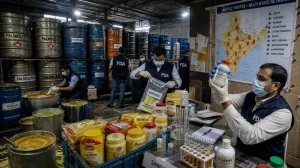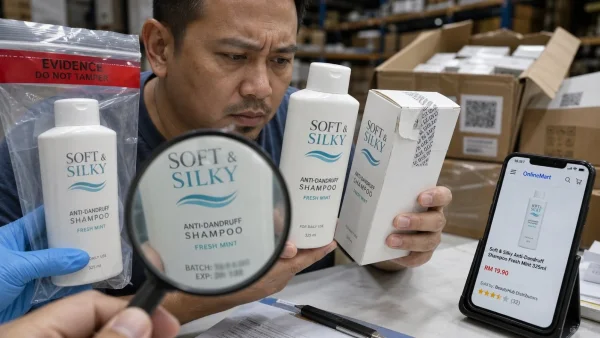
Counterfeit consumer products continue to raise concerns among shoppers, with allegations that fake shampoos and other personal-care products are being packaged in boxes designed to closely resemble genuine branded products.
The concern is particularly serious because packaging can create a powerful impression of authenticity. A product that looks almost identical to a familiar brand may be difficult for an ordinary consumer to identify as counterfeit simply by looking at the box.
The problem becomes even more complicated when such products enter online marketplaces, where buyers may have limited information about the seller and supply chain.
When Packaging Becomes the Deception
Counterfeiters often attempt to reproduce the appearance of established brands, including packaging, labels, colours and product names.
The objective is straightforward: make an imitation product appear genuine.
For consumers, the consequences can go beyond financial loss.
With products such as shampoo, cosmetics and personal-care items, buyers may have legitimate concerns about what ingredients are actually inside the package and whether the product has been manufactured and stored under appropriate conditions.
A fake product may not have undergone the same quality-control procedures as the genuine product.
That makes counterfeiting not merely an intellectual-property issue, but potentially a consumer-safety concern as well.
The Online Marketplace Problem
E-commerce has made counterfeit products easier to reach consumers across the country.
A customer can order a branded product from a mobile phone without ever seeing the seller, warehouse or distributor.
This creates a fundamental challenge:
If a product is counterfeit, how did it enter the marketplace in the first place?
Amazon, for example, says the sale of counterfeit products is strictly prohibited and that it uses seller verification, automated monitoring and other measures to detect potential counterfeits.
The company says its systems can remove problematic listings, block seller accounts, withhold funds and refer cases to law enforcement.
Amazon also operates Project Zero, which allows eligible brands to identify and remove suspected counterfeit listings, while its Transparency programme uses unique product codes to help verify authenticity.
But the existence of these systems raises an equally important question:
Are they sufficient to prevent counterfeit goods from reaching customers in the first place?
A Consumer’s Personal Experience
The concern becomes particularly relatable when consumers encounter suspected counterfeits themselves.
One consumer described receiving what they believed was a counterfeit dog-related product through Amazon.
After a complaint was raised, the customer said Amazon promptly arranged a replacement.
The response may have resolved the immediate customer problem, but it also raised a larger question:
How did a potentially counterfeit product pass through the marketplace’s checks and reach the customer at all?
A replacement can compensate an individual customer.
It does not necessarily address the wider supply-chain problem.
If one counterfeit item reaches a customer, there is a possibility that the same seller or inventory may have been offered to many other buyers.
That is why counterfeit complaints require more than individual refunds.
They require investigation of the seller, inventory, supplier and wider distribution chain.
Rural Consumers May Face Additional Challenges
Counterfeit products can be particularly difficult to identify in smaller towns and rural markets.
Consumers may have fewer opportunities to compare products with genuine items or verify authorised sellers.
Price can also become a major factor.
When a familiar product is offered at a significantly lower price, consumers may assume they have simply found a discount.
The packaging then reinforces that assumption.
Online shopping adds another layer because consumers often rely heavily on product photographs, reviews, ratings and seller information before making a purchase.
A convincing counterfeit can therefore exploit the trust consumers place in the platform itself.
Who Should Be Held Accountable?
The responsibility for stopping counterfeit goods does not necessarily rest with one party alone.
There can be several points of failure:
Manufacturer: Genuine brands must protect their supply chains and make authentication easier.
Distributor: Suppliers and distributors must ensure that products entering the market are genuine.
Seller: Sellers have a direct responsibility not to offer counterfeit goods.
Marketplace: Platforms must maintain effective seller verification, monitoring and enforcement systems.
Authorities: Law-enforcement and regulatory agencies must investigate large-scale counterfeiting networks and prosecute offenders where evidence supports criminal action.
The central issue is therefore not simply whether a platform has a counterfeit policy.
The question is whether the policy works effectively enough to protect consumers before the counterfeit reaches their doorstep.
Amazon Says It Has Anti-Counterfeit Measures
Amazon says it has invested in multiple systems to combat counterfeit products.
According to the company, its seller-verification programme uses documentation checks and technology-based risk assessment. It also says it continuously monitors listings for potential counterfeit, fraud and abuse.
Amazon’s Project Zero programme allows participating brands to remove counterfeit listings directly, while the company says its automated systems proactively block or remove a large majority of infringing listings detected through Brand Registry.
Its Transparency system goes further by using unique serial codes that can be scanned to verify product authenticity for participating products.
These measures demonstrate that the company recognises the seriousness of counterfeit commerce.
But a consumer complaint still presents an important test:
If a suspected counterfeit reaches a customer despite these safeguards, what failed—and what happens to the seller and the remaining inventory?
A Refund Is Not the Same as a Solution
For an individual buyer, receiving a replacement or refund is important.
But counterfeit commerce is a systemic problem.
Imagine that 1,000 counterfeit units enter an online marketplace and one customer discovers the problem.
If that customer receives a replacement but the remaining 999 units remain available, the fundamental problem has not been solved.
An effective response should potentially include:
Removing the listing;
Identifying the seller;
Tracing the supplier;
Inspecting remaining inventory;
Checking previous orders;
Identifying other affected customers;
Suspending repeat offenders;
Preserving evidence for law enforcement; and
Preventing the same seller from returning under another account.
Consumers Need Better Authentication Tools
Consumers should not have to become forensic experts simply to determine whether their shampoo, cosmetics or pet products are genuine.
Brands and marketplaces can make authentication easier through:
Unique serial numbers;
QR-based verification;
Tamper-evident packaging;
Authorised-seller lists;
Supply-chain traceability;
Clear manufacturer information; and
Rapid mechanisms for reporting suspected counterfeits.
Amazon’s Transparency programme is one example of serialization-based authentication, although it applies only to participating products.
The Bigger Issue: Trust in E-Commerce
Online shopping depends fundamentally on trust.
Consumers cannot physically inspect a product before ordering it.
They trust the platform.
They trust the seller information.
They trust the brand displayed on the screen.
And they trust that the product arriving at their doorstep is what they paid for.
Counterfeiting attacks every part of that chain.
Recent consumer research also illustrates the scale of the broader problem: a study reported in August 2026 found that 46% of surveyed consumers in Hyderabad said they had purchased a counterfeit product at least once, highlighting the continuing challenge of fake goods in the market.
The Question Platforms Cannot Ignore
The issue is not whether an e-commerce platform can provide a refund after a customer complains.
The more important question is whether platforms can prevent the same counterfeit supply chain from reaching hundreds or thousands of other customers.
If a suspected fake product is discovered, consumers deserve to know:
Who sold it?
Where did it come from?
How many units were sold?
Were other customers affected?
Was the seller suspended?
Was the remaining stock seized or destroyed?
Was the manufacturer notified?
Was the case referred to authorities?
Those answers would provide far greater reassurance than a simple replacement shipment.
Conclusion
Counterfeit products are not simply cheap copies of branded goods.
They undermine consumer trust, damage legitimate manufacturers and can create additional safety concerns when the authenticity or contents of a product cannot be established.
The alleged use of packaging designed to imitate genuine shampoo brands is therefore a warning sign of how sophisticated counterfeit operations can become.
E-commerce platforms have already developed sophisticated tools to detect and remove counterfeit listings. Amazon, for instance, says it strictly prohibits counterfeit sales and has invested in seller verification, automated detection, Project Zero and product-serialization systems.
But consumers are entitled to ask for more.
A genuine product should reach the customer—not a convincing imitation. And when counterfeit goods do slip through, the goal should not merely be to replace one customer’s package.
The entire counterfeit supply chain should be identified, stopped and held accountable.